Journal · Clinical reading · 10 min
Tranexamic acid for melasma: the evidence in pigmented skin.
What twelve weeks at 3% topical concentration looks like on Fitzpatrick IV to VI skin.
The Biomedical Emporium® formulation desk
11 March 2026
Tranexamic acid started life as an antifibrinolytic drug, prescribed orally for heavy menstrual bleeding. The skin observation came later. Patients on oral tranexamic acid were noticing that their melasma lightened, sometimes dramatically. The dermatology field spent the next decade working out how, why, and whether topical delivery could do the same.
The mechanism: tranexamic acid interrupts the plasmin cascade that melanocytes use to signal pigment production. It does not bleach; it prevents new pigment from being manufactured in the first place. That is a very different action from hydroquinone.
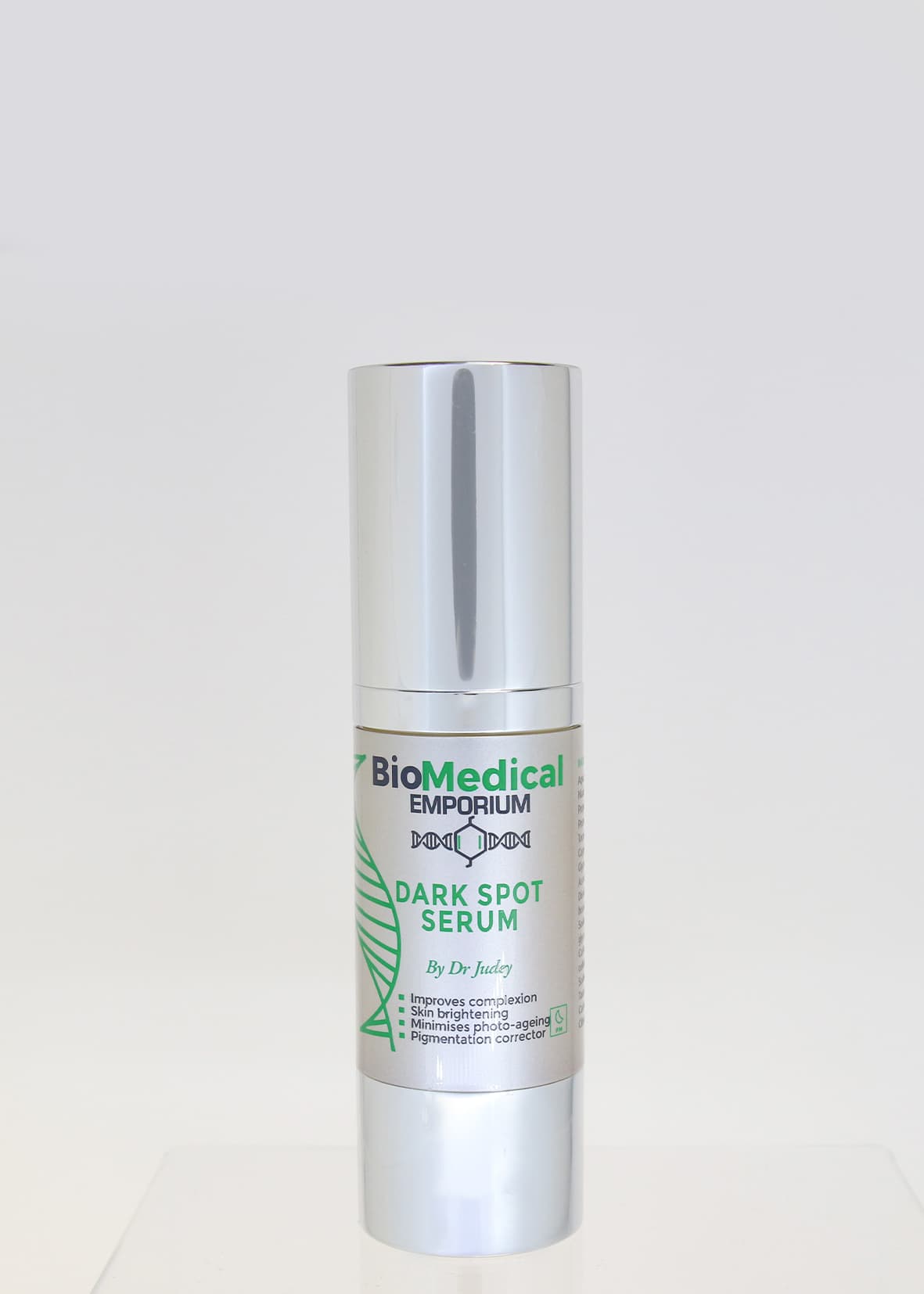
At 3% topical in a hydrating base, applied twice daily and paired with an SPF 30 minimum, the twelve-week data on Fitzpatrick IV to VI shows a spot intensity reduction around 40% and a melasma severity score reduction around 30%. The Dark Spot Serum sits at this concentration.
Read next
A ritual for reactive skin.
Pare the routine back to five ingredients. Reintroduce one thing at a time, on a fortnight cycle.